
A Street Planned Around Art, Architecture, and Community
Via Padova is not a typical residential street. It is the spine of one of the most deliberately designed artist communities in Southern California history, set on an elevated hillside above Claremont with panoramic mountain views and a cultural legacy that stretches back nearly a century.
Every other street in the Inland Empire just happened. Via Padova was planned. The homes along it were built under the direction of a founding vision that put art, architecture, and community at the center of everything. Understanding that history is the first step to understanding why property here holds significance and value that no other street in the region can replicate.
Laura Dandoy is a California-licensed real estate broker with over $1 billion in closed residential sales across the Foothill communities. She has represented buyers and sellers on Via Padova for more than 20 years, across six listing-side transactions and more than $6 million in represented volume on this street alone. That depth of direct experience on a single residential street is rare. It is the kind of knowledge that produces better outcomes for her clients.
The Origin of Padua Hills: A Community Built with Intent
The Padua Hills Theatre and the Mexican Players
Via Padova: Where the Artists Built Their Homes
Call Laura Dandoy to buy or sell in Via Padova.
Homes and Architecture on Via Padova Today
Via Padova is a low-inventory, low-turnover street. Approximately 55 recorded residential sales have occurred here since 2002, an average of fewer than three per year on a street of several dozen homes. Most owners stay for years, sometimes decades. When a property does come to market, buyers from throughout Southern California take notice.
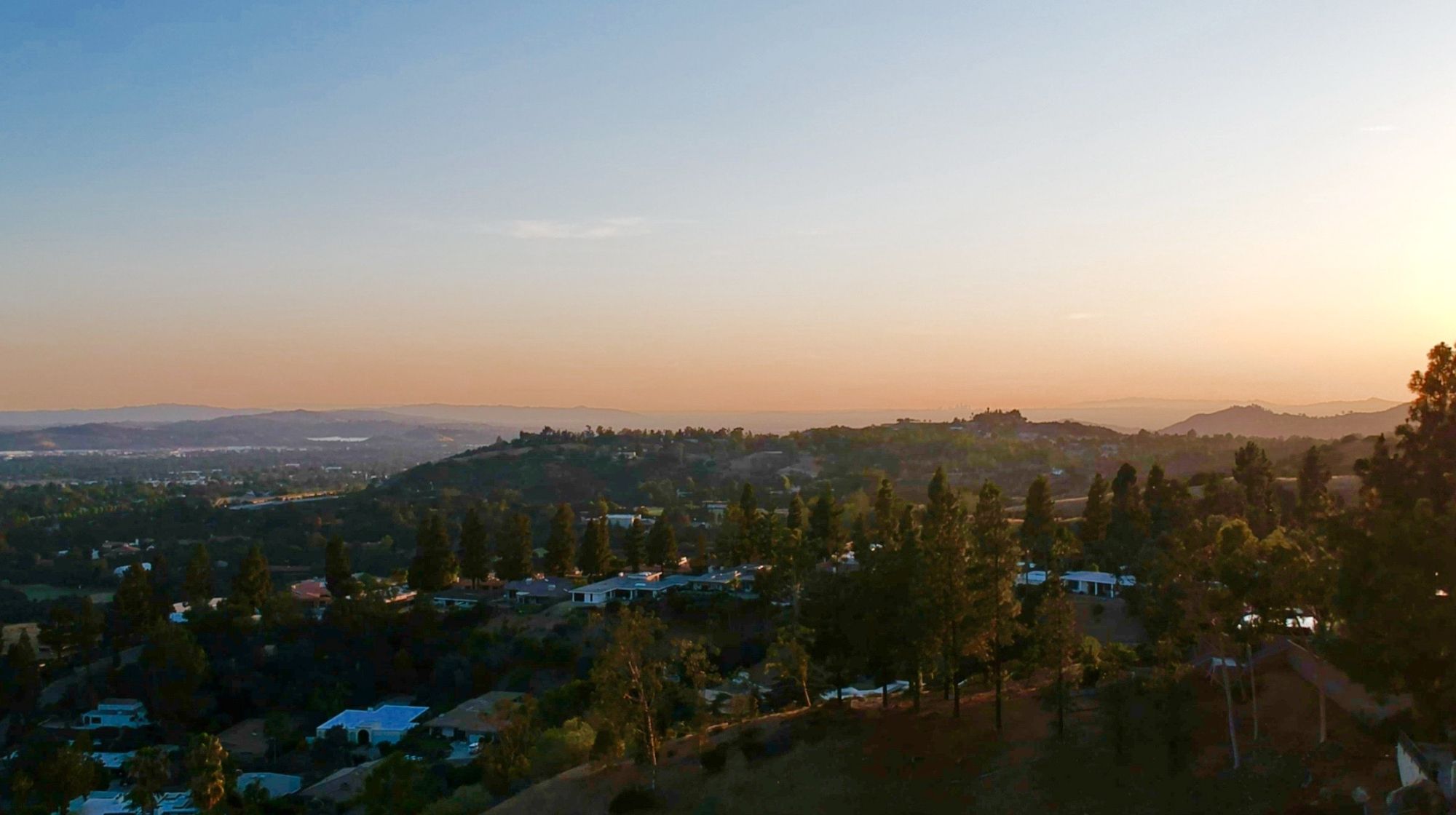
The homes along Via Padova sit on elevated hillside lots with southern and valley-facing exposures, offering views that span the Pomona Valley, the twinkling lights of the basin below, and the mountain ridgelines of the San Gabriel range above. Many lots exceed 15,000 square feet, with multiple outdoor levels, mature landscaping, and the kind of privacy that flat-lot suburban neighborhoods rarely produce.
Architecture along the street ranges from the mid-century California Modern designs of Neutra and Criley to Spanish Revival, Mediterranean, and custom ranch-style construction. Most homes were built between the late 1930s and the 1970s, with a number of significant renovations and expansions completed in recent decades by owners who respect the street's architectural legacy. Home sizes range broadly, from approximately 1,750 to more than 3,500 square feet.
Stone Canyon, Claremont's highest residential price tier, lies immediately adjacent to the upper Padua Hills area. Via Padova sits below that elevation, within the Padua Hills Community Association, and reflects its own distinct market positioned by history, architecture, and views rather than raw square footage or new construction.
Via Padova Real Estate Market Data
Why Via Padova Buyers and Sellers Choose Laura Dandoy
Via Padova and Padua Hills: Your Questions Answered
What is the difference between Via Padova and Padua Hills?
Padua Hills is the name of the broader hillside neighborhood in north Claremont. Via Padova is the primary street within that neighborhood, and the address most closely associated with the historic artist colony. Most buyers use the terms interchangeably, but Via Padova specifically refers to the residential street that runs below the Padua Hills Theatre site.
Is Padua Hills part of the City of Claremont?
What school district serves Via Padova?
Are there HOA fees in Padua Hills?
What happened to the Padua Hills Theatre?
Is Stone Canyon part of Via Padova?
Search Via Padova Homes for Sale
Laura Dandoy lists and sells homes along Via Padova, from mid-century California Modern estates near the Padua Hills Theatre to custom hillside properties with panoramic valley views at the street's lower reaches. With many listing-side transactions spanning more than 20 years on this street, double-ended closings in 2016 and 2021, and active representation across multiple price cycles, Laura brings the pricing precision and local depth that this low-inventory, high-pedigree street demands.
0 Properties

- Reset all filters or remove one of your filters above to see more properties